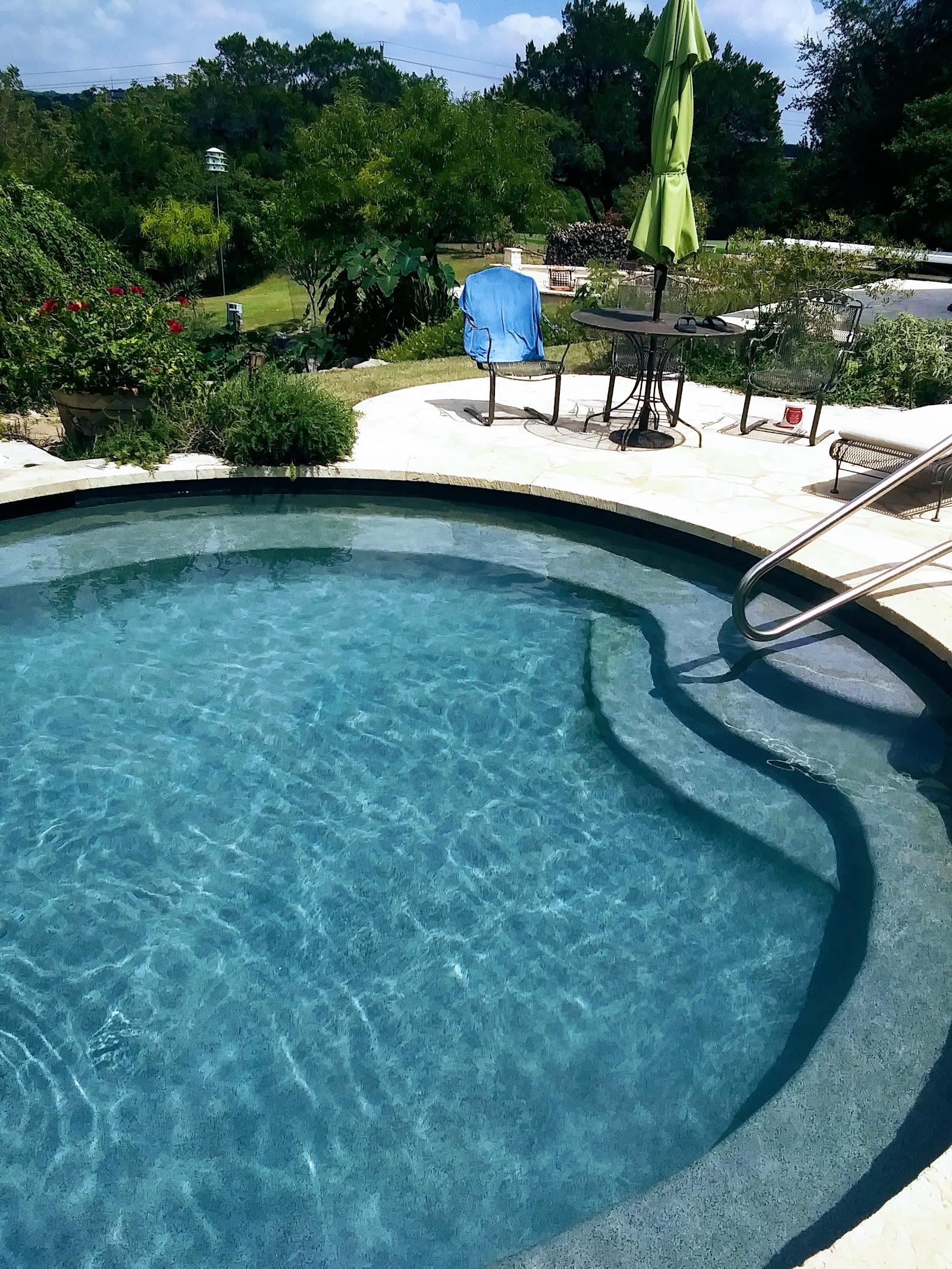
What a Green Pool Really Means
A green pool is not just a cosmetic problem. It means algae has taken hold, and the water chemistry is out of balance. Algae grows when there is not enough free chlorine to kill it, or when the pH is too high for the chlorine to work effectively. It can also happen when the filter is not running enough hours, or when phosphates and nitrates from lawn fertilizer or rainwater feed the algae. The green color comes from chlorophyll in the algae cells, and the more you see, the more established the bloom is.
The longer a pool sits green, the harder it is to recover. Algae can clog the filter, stain the plaster or liner, and create an environment where bacteria can thrive. That is why a professional algae treatment and green pool recovery is about more than dumping in a bottle of algaecide. It is a systematic process that restores the water chemistry, cleans the surfaces, and gets the filtration working properly again. Understanding what is happening under the surface helps you know why the recovery takes a few days, not a few hours.
Why the Water Turned Green in the First Place
There are several common reasons a pool turns green. The most frequent is a drop in free chlorine levels, often because the pump timer was set too short, a power outage stopped the filter, or a heavy rain diluted the chemicals. Another cause is a rise in pH above 7.8, which makes chlorine less effective even if the chlorine level tests okay. A third cause is a buildup of phosphates, which act like fertilizer for algae. These can come from leaves, grass clippings, or even some tap water sources.
Sometimes the problem is mechanical. A dirty filter, a clogged pump basket, or a broken weir door in the skimmer can reduce water flow and let algae get a foothold. A pool that is not circulating well will have dead spots where algae can grow undisturbed. Identifying the root cause is the first step in a recovery. Without fixing the underlying issue, the algae will come back as soon as the treatment wears off. A good service crew checks all these factors before they start the chemical treatment.
How a Professional Recovery Works
When our crew arrives for a green pool recovery, we start with a full water test. We check free chlorine, combined chlorine, pH, total alkalinity, calcium hardness, and cyanuric acid. Based on the results, we adjust the pH and alkalinity first so the chlorine can work effectively. Then we add a shock treatment, usually a calcium hypochlorite or sodium dichlor granular shock, at a much higher dose than a weekly maintenance dose. We also add an algaecide that targets the specific type of algae present.
After the chemicals are added, we brush the walls and floor thoroughly to break up the algae biofilm and release the algae into the water where the chlorine can kill it. The filter is run continuously, and we may need to backwash it several times over the next couple of days as the dead algae accumulates. The water will often turn cloudy or grayish before it clears, which is a sign the algae is dying. Over the next few days, the crew returns to re-test, re-dose, and clean the filter until the water is clear and balanced.
What to Expect During the Recovery Process
A green pool recovery is not a one-visit fix. It usually takes three to seven days, depending on how green the water was and how well the filter performs. The first day, the water may look worse before it looks better, turning a milky blue or gray as the algae dies and the filter catches the particles. The crew will need to backwash the filter frequently, sometimes multiple times a day, to keep the water moving. If the pool has a sand or DE filter, the media may need to be cleaned or replaced if it is old.
You will see the crew on site several times during the week. Each visit includes a water test, chemical adjustment, and a filter check. The goal is to get the free chlorine to hold steady, the pH to stay in the 7.4 to 7.6 range, and the water to clear to the point where you can see the bottom. Once the pool is clear, the crew will do a final balance and switch back to a regular maintenance schedule. It is important not to swim until the chlorine level drops below 5 ppm and the water is clear.
How to Keep the Pool from Turning Green Again
Preventing a green pool is mostly about keeping the water chemistry in the right range and the filter running long enough. Test the water at least once a week, and keep free chlorine between 1 and 3 ppm, pH between 7.4 and 7.6, and cyanuric acid between 30 and 50 ppm. Run the pump and filter for eight to twelve hours a day during warm weather, and consider a longer run time if you have a lot of trees or receive heavy rain. A pool cover can help keep debris and sunlight out, which reduces algae growth.
Regular brushing and vacuuming also help. Algae spores are always present in the air, and they will settle on pool surfaces. Brushing once a week dislodges them before they can take hold. If you notice the water starting to look dull or the walls feeling slippery, that is an early sign of algae starting to grow. A quick shock treatment and a brush can stop it before it turns green. Staying consistent with weekly service is the simplest way to avoid a full recovery, and it saves time and chemicals in the long run.